
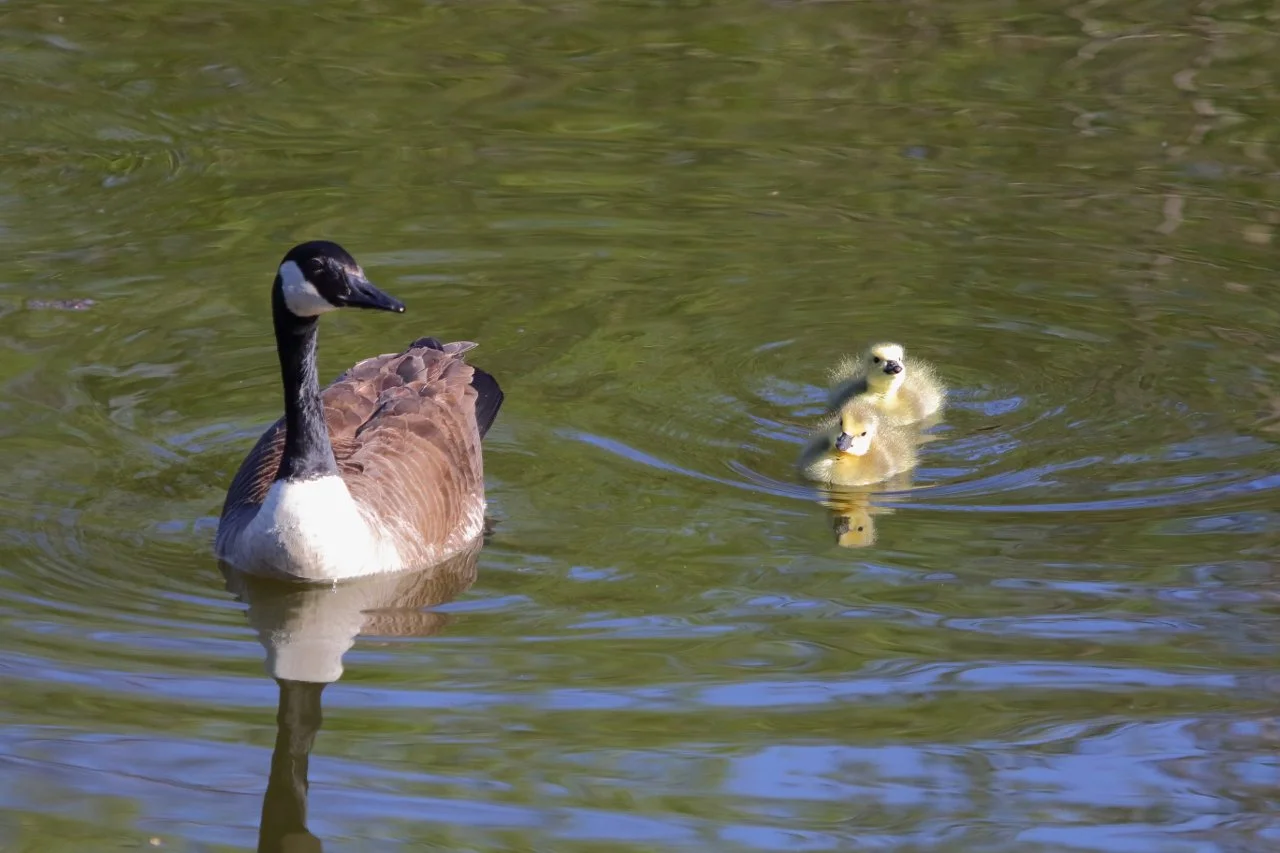
Canada Goose. Photo by Jeff Bryant.
By Roger Digges, CCAS Vice President
February’s bird of the month has been, by far, the most successful in the past half century of the 39 species I’ve covered in this blog, its population increasing by an average of 7% annually during that time.
Why? While a subspecies of this bird was extirpated (locally extinguished) in Illinois by 1900, thanks to captive breeding, relocation programs, stricter hunting regulations as well as the expansion of residential areas with ponds and expansive lawns, their numbers have skyrocketed, to the delight of hunters and those who enjoy just watching them. However, those who manage said ponds and those concerned about their impact locally on other birds and wildlife as well as people are somewhat less delighted. In fact, I’ve heard more than one birder refer to them as “flying rats.”
By now you’ve figured out that February’s bird of the month is the very common, in a few places too common, Canada Goose. You can find this bird anywhere in Champaign County any time of the year where there is open still water, lawns adjacent to that water, farm fields with fallen grain, or at odd places like, occasionally, the roof of my garage. To put it a different way, if you were in a spelling bee, given the word “ubiquitous,” and asked for a sentence using that word, the pronouncer might say, “Canada geese are ubiquitous.”
Why are they so reviled, not by all of us, but certainly by some of us? First of all, unlike most waterfowl, one subspecies of Canada Goose, the giant Canada (which may constitute up to 70% of all of our Canada Geese) never leave, as long as there’s open water or snow doesn’t bury their food source. Thanks to a warming climate, there is more open water and less snow than there was decades ago. Even if open water does freeze or snow does fall, giant Canadas won’t migrate far and return as soon as it warms up.
Also, since there were no giant Canadas left in Illinois until researchers in the 1960s began breeding and releasing them, researchers didn’t anticipate what problems release of giant Canadas might cause.
Second, because they tend to stay put, giant Canadas experience a longer breeding season than geese that migrate from our north, and they are outstanding parents, so they raise more young. Since their young also tend to stay put, there may eventually be more geese in their favorite ponds than is healthy for the pond or other waterfowl.
Third, being protective parents, Canada Geese are very aggressive during nesting season. They may attack people walking near what the geese regard as their territory, which, considering their size, can be quite intimidating, especially to children.
Fourth, goose poop. Geese eat up to 4 pounds of vegetation a day and excrete 1 to 2 pounds of droppings. While this might provide fertilizer for lawns, in large quantities it can cause algae blooms in ponds and even affect human health.
So, yes, Canada geese can be a problem. But they are also majestic birds, especially in flight. This is a comment I made about a bird sighting on February 20, 1988: “Greatest view ever of Canadas. On the road to Chatauqua [National Wildlife Refuge]. There were already tens of thousands of geese in the fields making an enormous racket with Vs backed up to the north as far as the eye could see. The fields were so packed with geese I wondered how any more could fit in, but, with much squawking, they did. Marvelous.”
So how can we preserve these birds but also protect ponds and people? We can plant tall perennials on shorelines or put netting on the lawns during nesting time. We can use lasers or loud sounds to scare them, taste repellents to move them elsewhere, or have trained dogs herd them. It sounds cruel, but it’s better than the alternatives.
In the meantime, it’s February. They’re not in the mood to attack. Enjoy them!
